Powered by Blogger.

Kitchen Kung Fu


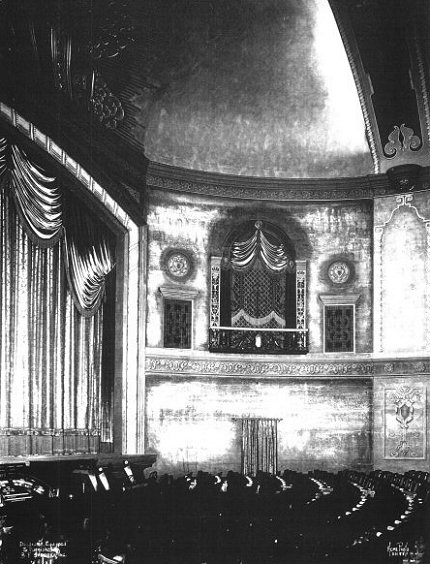
Last night I went to go see the The Bullet Ballet in the historic Hollywood Theatre. Oh, the tutus, the tulle, the lovely orchestra that must have played in this beautiful venue, which has graced Portland's streets since 1926!


Lies, oh what sweet little lies. No, The Bullet Ballet was a John Woo double feature, action extravaganza, and it was awesome. Hard Boiled and The Killer, right after another, on 35mm film, powered by a million bullets and Chow-Yun Fat's indefatigable charm as both killer and cop. I think my favorite part of the whole night was when the guy behind me yelled, "What!" when our hero blew a gangster to bits while cradling an infant in his arms. After cooing a rap lullaby to him. And naming him Saliva Sammy. No, really:

(This photo may look photoshopped, but I assure you, it's not.)

So if you haven't seen this film, you really should, for reasons that I think are obvious. A cop named Tequila! Mobsters in fancy suits! Babies flying through the air! Slow motion sequences so you don't miss a single bullet! Coded messages sent in bouquets of white roses! Eighties synth music! A plethora of bodies twitching in midair, perforated with bullet holes! Really, what is not to love?

Thus, in my own little homage to the genius of John Woo, I decided today to make my own Chinese ten-spice blend--because five is like, so seventies, man. I also decided to grind it by hand, because I'm a bad ass and love crushing pinky-sized pieces of star anise into gunpowder. Or I just don't have a spice grinder. Take your pick. The recipe is from the China Moon Cookbook, a bible of Chinese cookery from the San Francisco restaurant of the same name, which I found by chance in a used bookstore and have fallen completely in love with. I've been working my way through the "pantry" section, which features such staples as pickled ginger (god, so much slicing, why can I not find the other half of the mandoline) and pepper oil (let's see if this time I don't squirt chile juice into my eye). Once that's done I'll be able to stir-fry to the moon! And maybe even impress someone's Chinese grandmother, gringa that I am.

Dreams of Lunches Past


Today I pedaled back from my morning jaunt at the café down the street to find myself locked out of the house. I tried the front door, the backdoor, and seriously tried on the idea of going in through the open dining room window, before ruling it out on account of the thicket involved, the shortness of my dress, and the construction going on across the street. This would not have been so maddening had I not spent the last three hours inhaling the fumes of flakey biscuits and fried eggs and steeling myself from giving in to temptation with thoughts of how I could just fry myself an egg when I got home.

Alas, but no. Today I was doomed to eating the remnants of my refrigerator for lunch. It was cold food when all I wanted was something hot, Asian inspired when I craved something with some French flare. It's all I can do now at the library not to dream of better days, trying in vain not to drool all over my book, lest my fellow readers think that I find the cruelties of the communist regime in Rumania appetizing. (Which they definitely are not, even though, weirdly, the cover features an eggplant menacingly balanced on the tines of five forks.)

And so, I present to you not what I ate for lunch today--not even remotely close--but what I wish I had eaten for lunch today. It is a dish made buoyant by the bounty of the farmers market, a concoction created to let the ingredients shine, an arrangement inspired by the crates of vegetables lovingly packed into open-bed trucks in the sunshine and driven over roads made muddy by an onslaught of Oregon rain and--I might be getting carried away. But you would, too, if you were eating the belly of a salmon that had been caught twelve hours before you ate it.

Salmon with Springtime Ragout

The beauty of this dish is its flexibility: every vegetable loves being part of a ragout, which is a fittingly fancy, French name for sautéed vegetables that cling together with the barest hint of milk and cheese. I used fava beans, asparagus, sugar snap peas, spring onions, and carrots, but that's just what happens to be in season in Portland right now, and I'd never tried fava beans before. A warning: they're beans that require not one, but two shellings. I loved their buttery taste, but they're nearing the end of their season, so next time, maybe a handful of morel mushrooms, some fiddlehead ferns, a gaggle of baby squash...? I'm up for anything. The only thing that needs to change when the vegetables do is the preparation; some vegetables cook faster than others, so bear that in mind when wielding the knife. Also, have everything chopped and ready to go when you turn the burner on, because this is essentially a French take on stir-fry, so things might get a little racy in the kitchen. (Is it obvious that my blood sugar level is low?)

A Springtime Ragout

a handful of fava beans, wrested from 5-6 shells
extra virgin olive oil
fine grain sea salt

a few spears of asparagus, sliced into half-inch segments
a handful of sugar snap peas, strings removes and ends cut off, also sliced into half-inch segments
half a carrot, julienned
some lemon zest (or juice, if the former is lacking)
a splash of cream (or whole milk)
Parmesan or pecorino or similar hard cheese

First, the fava beans. Boil the shelled beans for about a minute in a pot of salted water, then drain and shock them with cold water. When cool enough to handle, shuck the second layer using a patented move I like to call the Pinch & Squeeze. Just be careful that you don't ricochet fava beans across the kitchen like I did. Put them beans in a cute little glass dish by the side of the stovetop, next to your other prepped vegetables, and get ready to fry.

Now that you're ready to get sautéeing, splash some olive oil, a big pinch of salt, and a tablespoon of water into a cold skillet, then turn the heat to medium-high. When the water starts to bubble, add the asparagus, carrots, and peas and cook, covered, for a little under a minute (or more, depending on the thickness of the asparagus spears). When the asparagus is bright green and just this side of tender, add the fava beans and cook for another thirty seconds, uncovered. Stir in the lemon zest, if using, a teensy splash of cream, grate the cheese of your choice on top, and slide them veggies onto a plate. Garnish with a big hunk of broiled fish caught the night before, and dig in.

(Oh man, I wish.)

Macarun Like the Wind from My Bad Puns

If you want to learn how to make macarons from the internet, well, there are hundreds of people who will tell you how to do it. None of them will hold your hand when you cry over how yours look nothing like the pretty little cookies lined up in rows in every snooty bakery this side of the Willamette. But thankfully, neither will they be around to force you to share with them when your ugly duckling macarons turn out to taste light years better than the pretty little cookies lined up in rows in every snooty bakery this side of the Willamette.

Dusted with Halen Môn

I think things started going south once I realized I didn't have a pastry bag, which all the pros use. Or maybe things got a little dodgy when it was revealed that my eight-year-old assistant had never folded his own shirts, let alone folded dry ingredients into delicate peaks of egg whites. Mercifully my English degree has left me well-equipped with an arsenal of metaphors for this kind of situation.

CHILDCARE PROFESSIONAL: Pretend like the egg whites are a baby and you don't want to kill it.
CHILD LABORER ASSISTANT: Okay. But what if I don't like babies?
CHILDCARE PROFESSIONAL: We can kill it later when we put it in the oven. I think this baby would taste a lot better if we baked it.
CHILD ASSISTANT: I'm going to stab it with the spatula.
[THE BATTER IS STABBED]
CHILD ASSISTANT: I think stabbing works better than folding.
CHILDCARE PROFESSIONAL: Ah, sweet, sweet innocence.

Clearly I was born to care for children.

Ugly Ducklings All in a Row

This time around I followed a recipe from the Los Angeles Times; I think I only have my inexperience to blame for their appearance. David Leibovitz has another recipe that I might try next, although it uses quite a bit more sugar than this one, which means I'll have to use a filling that's less sweet than dulce de leche. I tried out my homemade raspberry jam, some chocolate cabarnet sauce, and this, and dulce de leche was the clear winner. Although since I slathered it inside of a French pastry I think I'll have to refer to it as confiture de lait.

Dulce de Leche Dos
A little Halen Môn sprinkled on top makes everything okay.

Roll With It

It has been exactly one week since I last went to the farmers market. I'm surviving, somehow, but just barely, thanks in no small part to an impromptu escape to Witch Mountain Mount Hood with the Gang Bangs (so called because our initials, serendipitously, spell out BANGS, so now I know to whom I can turn when I begin my storied life of crime). Unlike the last time I visited, on Memorial Day, there was no snow in the driveway. Which makes sense because it is July, and all the snow is at the top, where all the ski racers in the country have apparently convened to train. In July. Go figure.

The coolest part of staying in the Reed ski cabin—besides the snow, ha ha—is that you never quite know who else is going to show up for the weekend. On this occasion, we were joined by a group of alums who woke up at twelve—midnight, that is—to climb the summit, disconcertingly eating breakfast at twelve am before lumbering off dressed like abominable snowmen in some pretty frightening looking boots. I hope they made it to the top before the snow all melted and they were left climbing in snow the consistency of ice cream. Their replacements were an alumni couple who met on their orientation trip, got married, and then started a family of two adorable kids who tried furiously to cheat me at Uno. Add to this a surfeit of board games, the half dozen dogs running around under foot, and my three-game gin rummy winning streak, and I was one happy camper. Particularly because the only thing I was camping on was an indoor cot. It was a very relaxing weekend.

On the drive back to Portland, we stopped by a roadside joint called Calamity Jane's, which specializes in burgers the size of your face. All of them come served on an ocean of fries. Some of them come with secret sauce that is butterscotch flavored. Some of them have silly names. And a special few come stabbed through the middle with a knife.

The Lumberjack

Our brave travelers confront the dread Lumberjack Special.

Suffice it to say that I was too traumatized from this encounter to do much cooking upon my return on Sunday night, and the one spectacular thing I cooked over the weekend—springy, sconelike oatmeal banana chocolate chip cookies—are irreplicable because, after consulting half a dozen recipes, nary a one of which I had the appropriate ingredients for, I just threw things pell-mell into the oven and prayed for the best. Maybe when again confronted with two tablespoons of butter, one egg, and half a brown banana I can make magic happen again.

Thus, as recompense for my lazy weekend, I offer a recipe tested last week chez la Cuisine du Sel—and though a week old, this baby is far from stale. I whipped up a batch of these a few days ago to play wingman to a bowl of broccoli gribiche, and have already started dreaming of the next bunch of spring onions that I can chop up into these beauties. I've got to get my daily chloro-fill somehow, right? And maybe if I still had a plate of these rolls lying around I wouldn't bring the world to its knees with my bad puns.

Rollin'

Scallion Herb Rolls
tweaked, just a tad, from Bon Appétit

2 teaspoons active dry yeast
1 teaspoon coarse salt
1 teaspoon sugar

1 3/4 cups plus 3 tablespoons all-purpose flour
1 teaspoon coarse salt
1 teaspoon sugar
4 tablespoons unsalted butter, chilled, cubed
1 large egg plus 1 yolk

1 1/4 cups coarsely chopped scallions
1/2 cup coarsely chopped fresh herbs (I used chives; the recipe calls for cilantro but I think you should get down with your crazy self and use whatever's running rampant in the garden)
1/2 cup sesame seeds
1 tablespoon black sesame seeds
3 tablespoons olive oil plus more for bowl and brushing


Proof the yeast by whisking 1/2 cup lukewarm water with the yeast, 1 tsp salt, and 1 tsp sugar; let stand about 10 minutes until frothy.

Combine the flour, butter, remaining salt, and sugar in a large bowl. Use your fingertips to rub in the butter until it resembles coarse meal, and then whisk in the egg, yolk, and yeast mixture. Switch to something you can beat the dough around with--a tough spatula, wooden spoon, anything--and knead the dough, using your weapon of choice, until it soft, smooth, and consistent, anywhere from five to ten minutes. Form the dough into a ball and transfer it to a large, lightly oiled bowl; or, if you're obsessed with one-bowl recipes like me, balance the ball of dough perilously on your spatula and use the other hand to smear olive oil around the bowl you just used. Cover and let rise until doubled in size, at least one hour (although it may take longer, and this dough won't complain about a lovely, long rise).

Once you're ready to get baking, line a baking sheet with parchment paper and preheat the oven to 350°. Combine the scallions and herbs in a food processor and pulse until finely chopped. Transfer to a medium bowl and stir in the sesame seeds and 3 tablespoons of oil. On a lightly floured surface, roll out the dough into a 18x9" rectangle. Spoon the scallion mixture into the center and spread it to the corners of the dough. Roll the rectangle into a cylinder from the short edge, and cut into 3/4" dough swirls. Transfer to the prepared baking sheet and brush lightly with oil. Bake until golden brown, about 30 minutes, and try to wait at least five minutes for them to cool before you bite into them, because they're hot. But pretty irresistible. 

All Rolled Up in Chives

Duck for Cover

The New Yorker recently ran a profile on an artist who runs a blog that republishes the internet's collective apologies for not updating their blog. So in an effort not to contribute to the collective shame of millions, I'll skip that part and just dive right in.

As many of you know, I'm spending the summer in Portland, taking care of a handfulla hooligans and living large in la Maison du Sel. Last week the boys came back from a trip to New York City, so for the past few days I've been running around with my arms full of basketballs and nerf guns. But I have no complaints, because I can finally stop dividing recipes into fourths—and there are never leftovers. Especially when I make two-minute pizza (to which I'll devote an entire post later).

I'm lucky enough in this city to have a farmers' market at my disposal every day of the week save Friday, so I've made a vow never to buy produce anywhere else. This morning, in addition to a riot of vegetables—flowering broccoli, tomatoes of every color, sweet as sugar snap peas, bushels of beets, kaleidoscopic fingerling potatoes—I picked up two of these darlings:

Two Peas in a Pod

Duck eggs! They're twice the size of chicken eggs and a little more ellipsoidal, which makes stuffing them inside a standard egg carton quite the feat. But the real difference emerges once you crack one open on, oh, say, a six million year old piece of Himalayan rock salt that's lying around the house.

On the Salting Block

That's a solid block of salt, about one-and-a-half inches thick, that with thirty minutes of heating on a gas burner turns into nature's best skillet, a primordial frying pan, mined from the depths of the Himalayan mountains and cut into a rectangle just for me. It's been waiting six million years for this: a fried egg with a thin veneer of crisp, salty perfection on the bottom, and then that glorious yolk, much larger and darker than that of its cousin Gallus gallus domesticus. I could have written paeans to the glory of this fried egg. But that would have meant letting my lunch get cold, and that would have been a crime with this waiting on the table—a buckwheat crêpe graced with a pile of sautéed beet greens, tomatoes, and artichoke hearts, and slivers of Boerenkaas from the Willamette Valley Creamery. Oh, I love summertime.

Crêpe

Just when I thought my stomach couldn't have it any better, the gods shined down on me in the stacks of the Reed library after a scanning disaster. Scanners, for those who are wondering, are about as amenable to processing sixty pages of full color Bon Appétit recipes as an eight-year old is to cleaning his room, as I tragically found out after I spent twenty minutes flipping pages and pressing buttons, to no avail. But after wandering woefully in the stacks, tears forming waterfalls of smeared mascara down my face, I found a Pabst wedged between the stacks, and all was once again good.

So the moral of the story is, kids, that when life hands you lemons—or a free can of beer—make a Michelada.

Michelada

Michelada Ooh La Lada


To derive civilization from a can of Pabst, you will need:

one can of cold beer
1-3 ounces of tomato juice
one fresh lime's worth of juice (about an ounce)
a dash of Worcester sauce
a dash, or several, of hot sauce
a dash of soy sauce
a fancy glass and ice, to serve
salt, for the rim

First, run a lime wedge along the rim of the glass to moisten it, and invert it onto a small plate dusted with the fancy salt of your choice (the one pictured is Haleakala Ruby, a Hawaiian sea salt mixed with volcanic alaea clay). Fill the glass with plenty of ice, and add all of the ingredients, finishing with the beer. Stir it all together—preferably with a swizzle stick—and adjust the flavors to taste with a dash of this or a splash of that. Then kick back in the sunshine and revel in how you just took a boring beer from flat to fantastic.